
To access the graphs and data sets of TMEX Agricultural Product Indices, including wheat, please click here.
How Are Wheat Prices Determined?
In the production and marketing of agricultural products, product prices and the factors affecting those prices are among the most important issues. The prices of agricultural products affect the sustainability of production, farmers’ incomes, and consumers’ food expenditures.
Wheat, one of the main agricultural products, is of strategic importance as a staple food source and is also the most suitable and cheapest grain for bread making. Approximately 75% of the grain has economic value as flour, while the remaining portion can be used as animal feed. Due to its status as a staple food source, it is a strategic product, and both its production and pricing are subject to comprehensive policies and programs.
Wheat, like other agricultural products, changes hands in different markets at different prices. Price analyses reveal price fluctuations based on quality and the effects of government programs on prices. In markets, the relationships between sellers and buyers lead to a series of prices and terms of purchase and sale, and an equilibrium price is formed under supply and demand conditions. Supply and demand conditions vary depending on the season, and this is reflected in prices. In addition, storage costs affect prices. There is a relationship between product quality and price, given the benefits that product standardization and grading provide to consumers.
Considering food safety and climate change issues, regulatory authorities also play an important role in price formation in the wheat market through wheat purchases or price regulations due to the role wheat plays in food safety and the possible consequences of climate change. In our country, the regulatory role in trade is performed by the Turkish Grain Board.
The fundamental factors determining “wheat” prices under free market conditions can be listed as follows.
Key Factors Determining Wheat Prices
- Price changes are influenced by the following factors on the supply side.
Ordinary price trends: Prices follow a trend that is parallel to the country’s current economic conditions.
Production Cost
- Storage extends the time of consumption by using resources so that the product can be consumed after the harvest season. Storage incurs costs due to the resources it consumes. Storage brings with it certain requirements (warehouses, cold storage, tanks, silos, etc.).
- Transportation is another factor that affects production costs. The cost of transportation is proportional to the distance the product is transported. There are also fixed cost elements that are not dependent on the distance traveled by transportation modes such as road, rail, and sea (loading, unloading, administrative costs, etc.). For this reason, transportation costs also affect product prices.
- The costs incurred by both transportation and storage push the price upward.
Seasonality
- The wheat harvest season may vary between May and August depending on regional differences. During these months, prices may tend to fall as the supply in the market will be high.
- When wheat stocks need to be cleared, prices are expected to fall as stocks need to be liquidated quickly.
Market Where Sales Are Made
- Selling the product in the market where it is grown results in a relatively low price.
- If the product is sold in a location further away from where it is grown, the price is expected to increase due to higher transportation costs.
Government Regulations
- Considering food security and climate change issues, regulatory authorities play a significant role in wheat market price formation through wheat purchases or price regulations due to wheat’s role in food security and the potential consequences of climate change. In our country, the regulatory role in trade is performed by the Turkish Grain Board.
- In parallel with the harvest seasons, the Turkish Grain Board announces purchase prices for grain products. Within the same scope, the Turkish Grain Board also carries out sales transactions during the consumption phase of the products after the harvest seasons, thereby providing products to producers.
- Production subsidies and support, along with support purchases, help reduce prices for consumers and lower costs for producers.
- Product consumption and export support will limit price declines by absorbing production surpluses, while customs duties and other import restrictions in international trade may increase supply in the domestic market, leading to price decreases or stabilization.
- Production restrictions and the absence of subsidies or support for production affect the price.
- In order to stop the price of staple foods such as wheat from rising above an acceptable level, the government can set a maximum price for the product and limit the upward movement of prices.
Producers’ Profit Expectations
- Producers supply the market with a product in direct proportion to the profit they expect from it in the future. If future price expectations for wheat are low, producers may refrain from producing it. A decrease in supply causes wheat prices to rise.
Physical Conditions
- Wheat is an agricultural product in the grain category that ranks first in the world and in Türkiye due to its ability to grow in different climatic conditions.
- Wheat grows in cool climates. It can not adapt to high temperatures during the early stages of development. Wheat continues to grow as long as the temperature is between 8-10 degrees and the relative humidity is above 60%. However, high yields are obtained in environments where annual rainfall during the growing season is 500 mm.
- When these physical conditions can not be met due to meteorological conditions, wheat supply decreases. This causes prices to rise.
- During periods of scarcity and drought, a decrease in supply leads to upward movement in prices.
Technological Conditions
- Technological advances increase production speed, which in turn affects supply. Machines and factories that process wheat enable more products to be brought to market faster thanks to technological advances. This leads to an increase in the supply of wheat in the market, thereby affecting wheat prices downward.
Number of Producers
- The supply quantity increases in direct proportion to the increase in the number of producers. A decrease in the number of producers of a product results in a decrease in the supply of that product, and consequently, an increase in its price.
- Price changes are influenced by the following factors on the demand side.
The price of the relevant commodity
- Corn, spelt, and quinoa can be considered substitute commodities for wheat. If the prices of these commodities, which can be used instead of wheat in the feed and food sectors, increase, demand for wheat, which is relatively inexpensive in the livestock sector, will rise. Therefore, wheat prices are expected to increase within a certain period.
Population growth
- Demographic distribution and population directly affect demand. As the population increases (through migration, rising birth rates, etc.), demand for the product also increases. Increased demand causes prices to rise. A decrease in population leads to a proportional decrease in demand for the product. Decreased demand causes prices to fall.
Future price expectations
- Expectations that wheat prices will rise in the future lead to increased demand today, as prices are expected to remain relatively low. This increase in demand is expected to push prices upward.
Standardization of the Product
- Establishing wheat product standards increases production and price efficiency, thereby leading to an increase in demand. An increase in demand for the same supply quantity causes prices to move upward.
Seasonality
- During periods when the demand for wheat increases throughout the year, prices tend to rise due to excess demand.
How Are Wheat Prices Formed in the TMEX EWR Market?
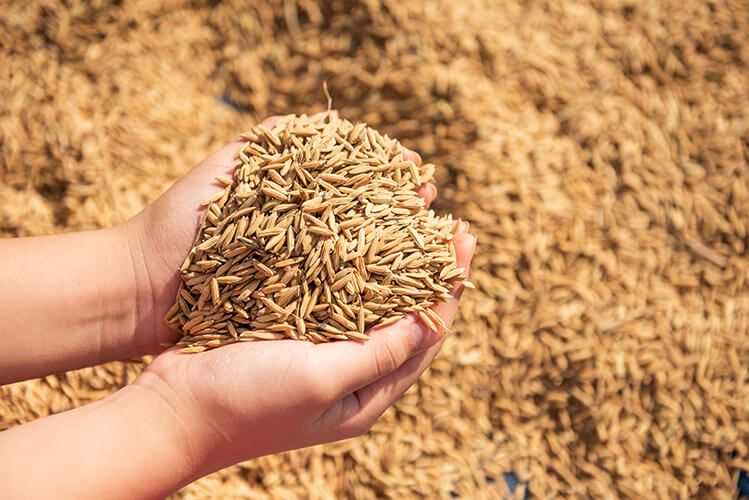 Wheat is processed in classes classified according to the quality criteria of products determined by the Ministry of Trade. In the domestic and imported distinction, Wheat Bread and Wheat Durum are processed in separate categories under their respective sub-classes. Therefore, quality criteria, delivery points, etc., are taken into account according to the product class. Buyers and sellers can set their order prices accordingly.
The Exchange calculates volume-weighted average prices (VWAP) based on transactions occurring in the EWR Market Normal Session according to the continuous auction method, based on supply and demand. These prices are shared with the public in the Daily Bulletin published on our Exchange’s website every day.
TMEX may set a price change limit (margin) for a product (ISIN) during a session. In this case, the price of orders that can be placed during a session must be within this limit.
 Wheat Prices, TMEX EWR, Wheat Index
What Are the Types of Wheat?
Wheat EWRs can be traded in EWR Market in 4 different types as “Wheat Bread”, “Wheat Durum”, “Imported Bread” and “Imported Durum”.
Within the “Wheat Index,” “Wheat Bread Index,” “Wheat Durum Index,” and “Grain Index” TMEX Agricultural Commodity Indices, wheat EWR trading pricesare represented.
The wheat varieties mentioned above are determined according to classifications made based on the circulars published by the Ministry of Trade. These standards are available on our website.
To access wheat prices and the graphs and data sets of the TMEX Agricultural Product Indices, please click here.
After being separated into bread wheat and durum wheat;
- Moisture content,
- Percentage of matter other than sound grains (not exceeding 3% in total for bread/durum wheat, and 18% for low-quality bread/durum wheat),
- Protein value
- Sedimentation in bread wheat and turning grain value in durum wheat,
- Hectoliter mass (kg/hL),
is classified according to quality criteria.
What is the Multiple Price Continuous Auction Method?
The method of continuously matching orders sent to the EWR Market Trading System at different prices in accordance with price and time priority rules is called the Multiple Price Continuous Auction Method. In this method, orders are compared with opposing orders as soon as they are sent to the system. Transactions are executed according to price and time priority. In the order of execution of orders, price is considered first; if prices are the same, time priority is then considered.
- Price Priority: A priority rule that ensures low-priced sell orders are executed before high-priced sell orders, and high-priced buy orders are executed before low-priced buy orders.
- Time Priority: A priority rule that ensures, in the event of price equality among entered orders, the order recorded earlier in the system is executed first.
About Wheat Prices
How Are Wheat Prices Determined? | ✅Purchase and sale orders submitted to TMEX are matched using a continuous auction method with multiple prices, and transaction prices are determined accordingly. |
What are the types of wheat? | ✅“Bread Wheat,” “Durum Wheat,” “Imported Bread Wheat,” and “Imported Pasta Wheat.” |